
Intraoral Scanner and How Does It Work
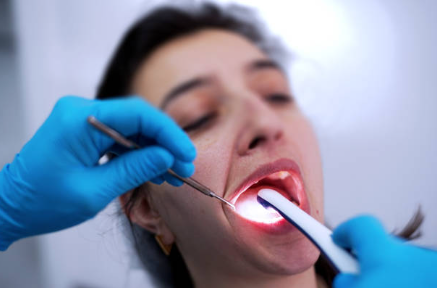
In recent years, technology has brought astonishing changes in the field of dentistry that help both patients and professionals get better results with no discomfort and faster treatments. One such advancement is the use of intraoral scanners. These advanced tools in dental practices are more accurate, comfortable, and efficient ways to capture detailed images of a patient’s teeth and gums.
If you have ever gone to the dentist for a procedure like crowns, bridges, or clear aligners, you have likely seen an intraoral scanner. But what actually is it, and how does it work? To know this, let us go deep!
What is an Intraoral Scanner?
An intraoral scanner is a small, pen-like device used in dentistry that gives you clear 3D images of the inside of a patient’s mouth. Contrary to the traditional methods, which consist of messy, uncomfortable molds and impressions, intraoral scanners are fast, precise, and non-invasive. This scanner captures high-resolution digital impressions of your teeth and gums that you can instantly view on a computer screen. The images produced are very detailed so that dentists can assess dental conditions more effectively and plan treatments accordingly.
That is why dentists use intraoral scanners for almost all types of dental procedures, including the design of crowns, bridges, veneers, and even clear aligners. So, there is a reduced need for physical molds that make dental treatments quicker for patients.
How Does an Intraoral Scanner Work?
The Scanning Process
The scanning process with an intraoral scanner is simple. Firstly, the dentist will insert the scanner into your mouth and move it gently along the surface of your teeth and gums. This moving scanner emits a safe, invisible light that bounces off the surfaces inside the mouth to capture highly accurate images of the teeth and gums. The scanner’s camera collects all light reflections and sends the data to a computer, which converts it into a 3D digital model.
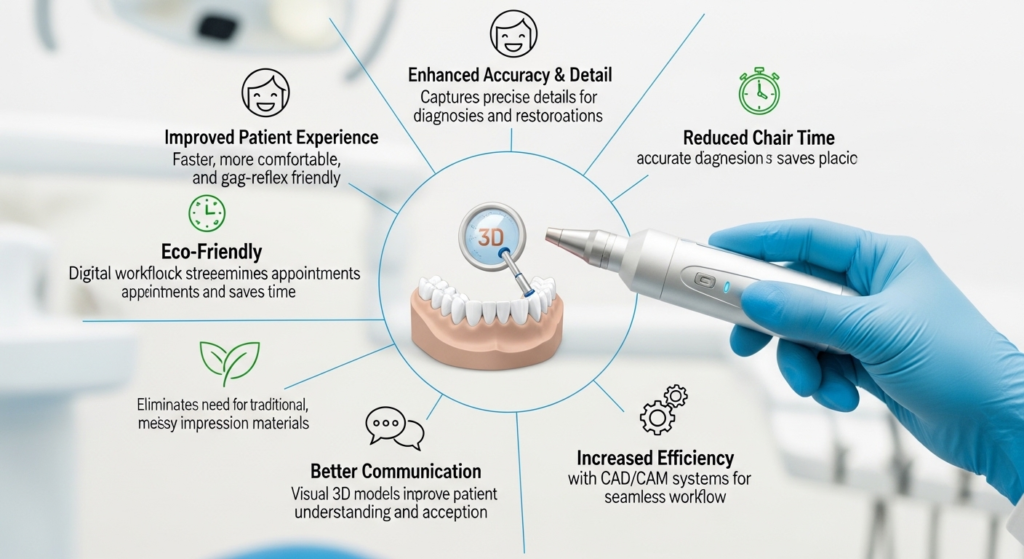
One interesting point about intraoral scanners is their ability to capture images instantly. Traditional methods, such as taking impressions with putty, take minutes and are uncomfortable for patients, especially those having a strong gag reflex. In contrast, the intraoral scanner captures high-quality images within a few seconds that reduces wait times and increases comfort.
Accuracy and Precision
You can never ignore accuracy in dental treatments. Being more precise, intraoral scanners capture minute details that you cannot achieve with traditional impression methods. The digital models are so accurate that dentists use them to design crowns, bridges, and other dental restorations with the utmost precision.
With traditional impressions, there is a risk of distortion or errors due to the molding material or patient movement. Intraoral scanners eliminate such issues by providing a clearer, more reliable image. This level of detail makes dental restorations fit perfectly without any need for adjustments.
Real-Time Image Processing
Another bonus point of intraoral scanners is their ability to provide real-time image processing. During a scan of the teeth, the dentist can instantly see images on a computer screen. In this way, they can get the results right away and adjust them accordingly during the scanning process. If the initial scan is incorrect, the dentist redoes it without waiting for the physical molds to set or for them to be sent to a lab.
Due to viewing and assessing the images immediately, the overall process is sped up. The dentist also identifies any issues early on and creates an efficient treatment plan.
Integration with Other Dental Technologies
Dentists often integrate intraoral scanners with other dental technologies, such as computer-aided design (CAD) and computer-aided manufacturing (CAM) systems. Such technologies help dentists to capture digital scans and use them to design custom restorations, such as crowns, bridges, or aligners. After the completion of the design, the restoration can be manufactured right in the office by a 3D printer or milling machine.
This integration is just to simplify the entire process and speed it up. For example, patients who need crowns cannot wait longer for weeks for their dental work to be sent off to a lab. With intraoral scanners, the process is completed in just one visit, making it more convenient and less stressful overall.
What Are the Benefits of Intraoral Scanners in Dentistry?
Improved Comfort for Patients
The major benefit of intraoral scanners is the comfort they provide to patients. Traditional impression molds made from putty are not only uncomfortable but also sometimes gag-inducing. Many patients do not like the sensation of having a large tray filled with gooey material in their mouths. Luckily, intraoral scanners are free of such discomfort. The device is small, and the scanning process is quick and non-invasive, which allows patients have a more pleasant experience.
Time Efficiency
Intraoral scanners save time by simplifying the process of taking dental impressions. There is no need to wait for physical molds to harden, and patients do not have to keep any messy material in their mouths. The fast scans make you get the results immediately and reduce the length of dental appointments.
Enhanced Treatment Planning
Due to the accuracy and precision of intraoral scanners, dental professionals can make wise decisions about a patient’s treatment. The detailed 3D images allow the dentist to plan treatments with greater clarity, whether it is designing a custom crown or creating a customized orthodontic treatment plan. The result is a more tailored, effective treatment approach that fulfills the patient’s requirements.
Better Communication
Intraoral scanners also improve communication between the dentist and the patient by displaying digital images being displayed on a computer screen. The dentist shows the patient exactly what they are seeing. As a result, the patient understands their dental condition and the proposed treatment. Also, the dentist can explain any concerns or areas that need attention, giving rise to a better understanding and a collaborative treatment process.
What Is the Future of Intraoral Scanners?
As dental technology evolves, intraoral scanners are becoming even more advanced. Improvements in scanning speed, image resolution, and integration with other technologies will further enhance these devices’ features.
In the future, we will definitely find even more uses for intraoral scanners, such as in the early detection of dental issues. The increasing adoption of intraoral scanners reflects a growing trend toward more patient-centered care, where comfort, convenience, and accuracy are top priorities.
Why Choose Dunedin Shores Dental Care?
Dunedin Shores Dental Care is a top choice for dental care in Dunedin, Florida, offering personalized, compassionate services for the whole family. Our experienced team, led by expert dentists, provides comprehensive care, with a primary focus on prevention, education, and long-term oral health.
We use advanced technology and offer various services such as cosmetic dentistry, dental implants, and emergency care. Patients praise our welcoming atmosphere, friendly staff, and gentle approach. The clinic is committed to making dental care accessible and affordable with various insurance plans and payment options.
Final Thoughts!
To sum up, dentistry has improved significantly with the use of modern techniques. If you are in need of dental work and want to experience the comfort, precision, and efficiency of intraoral scanning, do not wait any longer. Book an appointment with us right now and enjoy a more comfortable, quicker, and accurate dental experience. Our skilled team uses the latest technology to deliver the best possible care.
Schedule a Consultation with us to know more about how intraoral scanning can improve your dental treatments.